

“I wish I could do yoga, but I can’t. I’m not flexible enough.”
I’ve heard this more times than I can count, and it always makes me a little sad.
I understand the logic behind it, but let me offer you a reframe: saying you are too stiff for yoga is kinda like saying you are too unfit to go to the gym. You don’t wait to get into shape before working out; the workout itself is what gets you there.
The practice creates the path.
But here’s the real secret: becoming physically flexible was never the actual point of yoga anyway.
The true purpose of yoga has always been to create flexibility of the mind.
Yoga vs. Asana
I understand why people feel intimidated to go to a yoga class, especially when they don’t feel flexible enough. Most of us are conditioned to believe that yoga is entirely about complex poses — asanas — and the linear progression of them. In the Western world, yoga is generally marketed as a fitness class.
And that’s exactly how I discovered it. In Grade 11, yoga was offered as an alternative to Physical Education. Because I hated P.E., I signed up in a heartbeat! A recent diagnosis of both scoliosis (lateral curvature of the spine) and lordosis (inward curvature of the spine) also inspired my choice; stretching out on a mat sounded far better than running laps around a track or working out in a gym.

Before that high school class, I hadn’t done much, if any, yoga. To me, “yoga” was simply a fitness routine: you stretch, perform physical poses, sync your movements to your breath, place your hands in a prayer position, and say “namaste” at the end. (I’ll elaborate on the true meaning of namaste later in this post).
That was the beginning of my journey, at age sixteen. Time on my mat was my time. It was a safe place where I noticed how my body could move — and how it couldn’t. As I learned the basic postures, I began deepening the connection between my mind and body.
Yet, I still struggled with my mindset. I constantly compared myself to others, judged myself based on how far I could stretch to touch my toes, and questioned whether I was doing a pose “right” — all while never knowing what “namaste” really meant.
My practice continued after high school, but mostly at my home. I bought my first yoga book, The Women’s Health Big Book of Yoga, to guide myself through the poses I learned at school. At age 22, while transitioning off antidepressants, yoga called me to practice in a local studio. I started taking hot yoga classes at Oxygen Yoga, in addition to my home practice.
Now, at 32, I look back on my 16-year journey. Though I’ve stepped away from the mat at times, yoga has always called me back. I’ve moved through different studios, taken classes in other countries, and studied numerous books. In that time, I have learned what styles I enjoy and what I prefer to leave out of my practice.
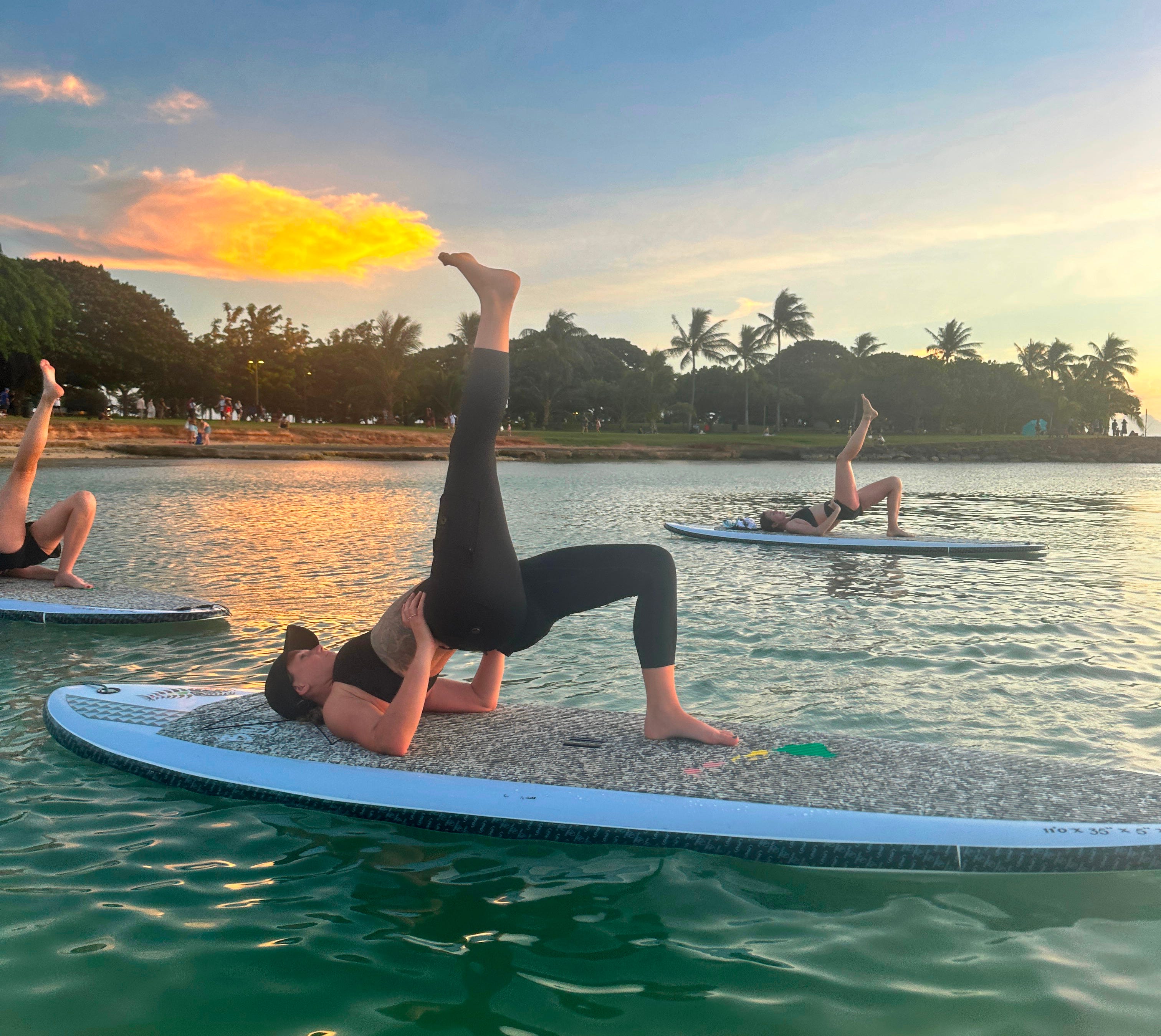
Whether I needed to heal physically, slow down my mind, or turn inward for a moment, my asana practice has always been a constant anchor; a grounding routine. It has healed me and guided me through the most difficult chapters of my life: struggles with anxiety and depression, physical pain from chronic conditions and accidents, emotional trauma, and times of spiritual disconnection.
Yoga supported me through all of it — the physical, emotional, mental, and spiritual. My time on the mat has always felt more like a spiritual practice rather than a workout.
And that’s because the true meaning of yoga is not about the poses; it is a path to union.
The Sanskrit word yoga means “to yoke”. To yoke is to unite, to become one with. Yoga is a path of connecting and becoming one with your body, mind, and soul — one with Spirit and one with each other, as we are all connected.
It is a journey home to yourself to experience nirvana or samadhi — ultimate bliss. It is a process of self-exploration and self-understanding, gaining awareness of your mind, body, soul, and the world around you.
So, If Yoga is Union, Why Are We Doing These Poses?
It wasn’t until my yoga teacher training that I realized the true meaning of yoga, and discovered, surprisingly, that I had been practicing its essence almost my entire life.
What have we been conditioned to think yoga is? Usually, we mistake “yoga” for yogasana. The word asana comes from the Sanskrit for “seat”. It is just one single aspect of a yoga practice. Calling asanas “yoga” is like calling one finger the whole hand; it is only a sliver of the full picture.
Originally, the sole purpose of asanas was to prepare the physical body for meditation. In fact, it is only within the last 1,000 years that practitioners began exploring more than 200 different poses. In traditional Hatha yoga, there were originally only 16 asanas, all specifically designed to create a stable, comfortable seat for meditation.
Simply put, yoga is the ultimate practice of union, while yoga asanas are the physical “seats”, which we also call “postures”, where we train the mind-body connection to get us there. The asanas support quieting the mind so we can sit for long periods.
You do not need to be flexible enough to put your leg behind your head or balance on one foot to experience this. While advanced poses can build inner stillness, they aren’t necessary. You also don’t need to practice yoga strictly for fitness. While fitness is a beautiful byproduct, it was never the goal.
True yoga is the practice of coming home to yourself.
In Patanjali’s Yoga Sutras, translated by Sri Swami Satchidananda, yoga asanas make up just one of the eight limbs on the path of Ashtanga Yoga. The other limbs include:
Yamas & Niyamas: Ethical principles and personal observances.
Pranayama & Pratyahara: Breath control and sensory withdrawl.
Dharana & Dhyana: Concentration and meditation.
Samadhi: The ultimate state of superconscious bliss.
💡 Want to dive deeper? Read my full breakdown on the Yamas & Niyamas to explore the ethical foundations of a yogic lifestyle.

The Branches or Paths of Yoga:
Ashtanga is only one branch of the tree. There are many paths to yoga, and you may find yourself drawn to different branches at different points in your life.
Hatha - the Physical Path. The one most of us know. It uses the physical body as a vehicle for union, pairing movement with breath to cultivate presence and awareness. It involves asanas (postures), mudras (seals), pranayama (breathing techniques), bandhas (energy locks), and kriyas (cleansing practices).
The word Hatha comes from the Sanskrit “Ha” (sun) and “Tha” (moon), representing the union of active masculine energy and passive feminine energy within us. We hold the pose actively (masculine energy), but we also feel into it (feminine energy).
Raja — the Royal Path. The path of the mind and meditation, encompassing Patanjali’s eight-limbed system.
Jnana — the Path of Wisdom. The practice of philosophy, deep contemplation, and self-inquiry. This path connects beautifully to the practice of reading tarot cards — turning inward to access your own intuition and inner knowing.
Bhakti — the Path of Devotion. Expressed through chanting, prayer, and surrendering to a higher power or something greater than yourself.
Karma — the Path of Selfless Action. Acting without attachment to the personal outcome. It relies on the understanding that every action has a reaction; every cause has an effect. Karma is neither “good” or “bad”; it simply is.
Tantra — the Path of Energy. Practicing absolute presence in all earthly things — conscious eating, enjoying a glass of wine, feeling the warmth of the sun, and practicing sacred rituals. This is the path of non-duality: just like Karma yoga, there is no “good” or “bad”, there is only conscious experience in the human body.
Kundalini — the Path of Awakening. Channeling the dormant energy at the base of the spine, allowing it to rise through the chakras toward spiritual enlightenment.
Nidra — the Path of Yogic Sleep. A practice of conscious deep rest that guides you into the threshold between waking and sleeping. In this practice, you stay in only one asana — savasana (corpse pose). You remain completely still, maybe even cozied up with a blanket and a pillow under your head.
Yoga is a Way of Life
This is just a taste of what yoga really is, and honestly, we’ve barely scratched the surface.
Yoga is not something you achieve; it is something you practice becoming. It is a way of life — a spiritual path toward enlightenment, bliss, and supreme union. Yogis call this state samadhi. I call it euphoria.
In Sanskrit literature, like the Bhagavad Gita, this quality is referred to as sattva. Sattva represents goodness, purity, harmony, and light. To bloom into this euphoria is simply to grow into what is already true and good within you.
So, what about the word namaste? The word we say at the end of every yoga class? It literally means, “the light in me honours the light in you.” It is a profound recognition that I see you, because you are a reflection of me. It is a reminder that we are all inherently connected. We are all one.
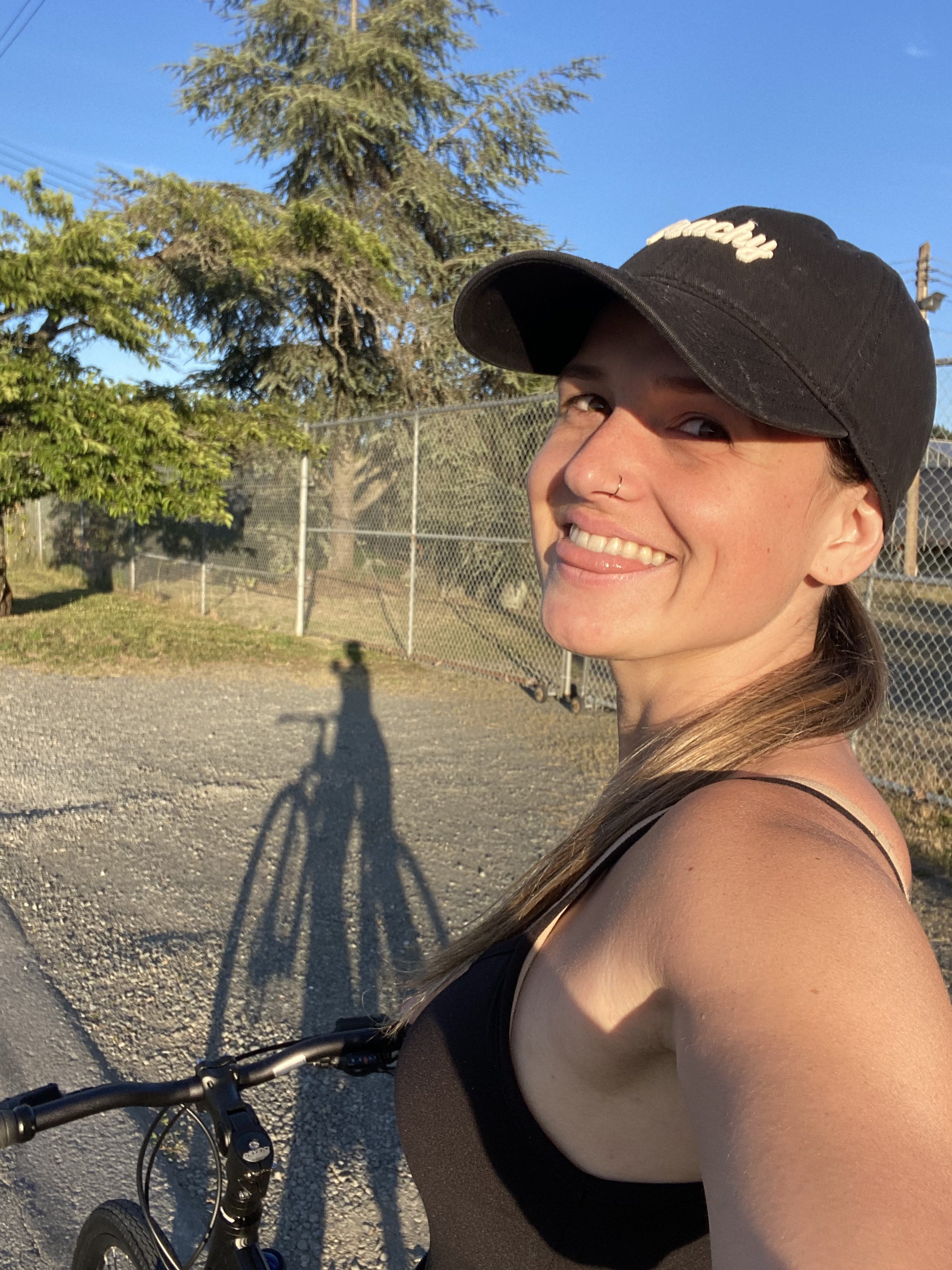
The true practice of yoga does not begin or end on your mat. You don’t need to perform a single physical posture to practice yoga. Yoga is found in how you breathe when you’re stuck in traffic. It is in how you choose to respond instead of react. It is in how you treat your body, your mind, and the people around you. Yoga is practiced in how you move through the world with intention and awareness.
I will continue sharing more about yoga — its rich history, diverse styles, and daily practices — in future posts. For now, consider this an invitation to stay curious about yoga and all it has to offer.
With love.